


Endovascular Aneurysm Repair (EVAR) with the Endologix Device
What is Endovascular Aneurysm Repair (EVAR) with the Endologix Device?
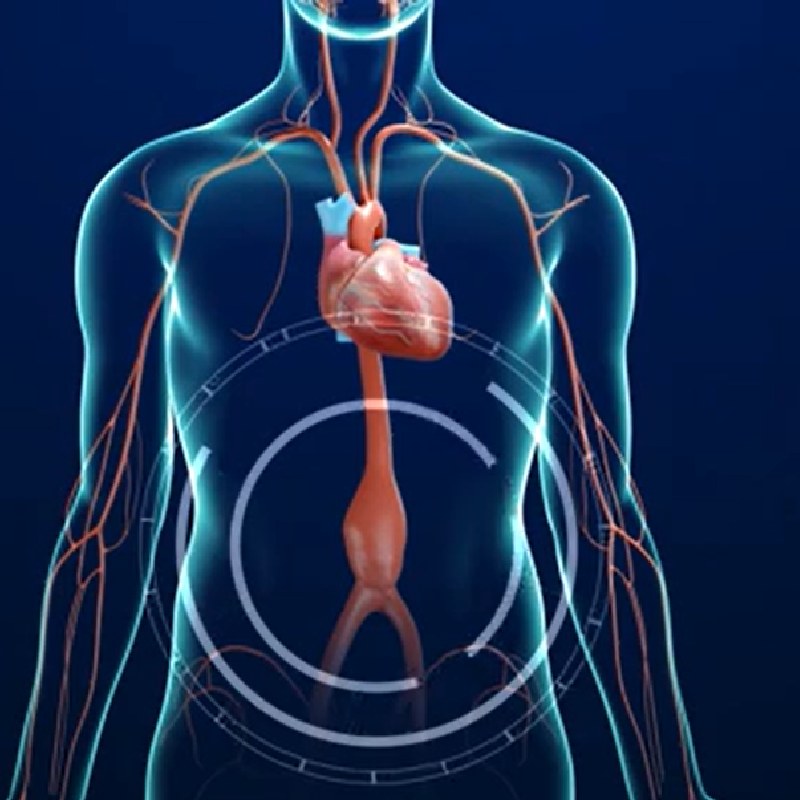
Endovascular Aneurysm Repair (EVAR) with the Endologix device is a minimally invasive surgical procedure to treat an aneurysm in the aorta using a stent-graft from Endologix. The aorta is the main blood vessel that carries oxygenated blood from the heart to the different parts of the body. The aorta extends from the chest to the abdomen, where it branches into the iliac arteries. The iliac arteries carry blood to the lower regions of the body and to the legs.
The EVAR procedure involves inserting a stent-graft (a metal mesh tube covered with fabric) called Nellix® from Endologix through arteries in the groin under X-ray guidance and advancing the stent-graft up into the site of the aneurysm in the aorta to reinforce the blood vessel and help prevent the aneurysm from bursting.
EVAR with the Endologix device is often performed to improve blood flow to an area of the aorta that has been damaged or obstructed, following an injury, disease, or other conditions.
What is the Endologix Device?
The Endologix device is a common term used to refer to the Nellix® EndoVascular Aneurysm Sealing (EVAS) System or Endologix Nellix EVAS System that is used to treat aneurysms in your aorta. Nellix is a stent graft with bags consisting of polymer material. It is called a stent-graft because it contains an internal metallic tube structure made up of a cobalt-chromium alloy with a fabric covering (called the graft) composed of ePTFE, a Teflon type material. Two bags attached to the outside of each stent-graft consist of the polymer material.
Indications for Endovascular Aneurysm Repair (EVAR) with the Endologix Device
EVAR with the Endologix device is indicated for the treatment of a condition called an aortic aneurysm. An aortic aneurysm is defined as an abnormal ballooning or bulging of a section of the aorta due to weakness in the wall of the blood vessel. An aneurysm can develop anywhere along the aorta:
- An aneurysm that occurs in the segment of the aorta that transcends down the chest is called a thoracic aortic aneurysm.
- An aneurysm that occurs in the segment of the aorta that passes through the abdomen is called an abdominal aortic aneurysm or AAA. This is the most common type of aortic aneurysm.
Your surgeon may recommend an endovascular aneurysm repair for the following conditions, including:
- You are not a candidate for traditional open repair
- The aneurysm or bulge is increasing or growing in size (5 cm or more)
- To prevent the risk of rupture of the aneurysm, which can cause death
- Damage to the aorta from injury or trauma
- Focal penetrating ulcer in the aorta
- Aortic stenosis or narrowing of the aorta
- Aortic dissection or separation of the 3 layers of the aorta
Preparation for Endovascular Aneurysm Repair (EVAR) with the Endologix Device
Preoperative preparation for EVAR with the Endologix device may involve the following steps:
- A review of your medical history and a physical examination to check for any medical issues that need to be addressed prior to surgery.
- You may need to undergo diagnostic tests such as blood work and imaging to help detect any abnormalities that could compromise the safety of the procedure.
- You will be asked if you have allergies to medications, anesthesia, contrast dye, or latex.
- You should inform your doctor of any medications or supplements you are taking or any conditions you have such as heart or lung disease.
- You may be asked to stop taking medications, such as blood-thinners and non-steroidal anti-inflammatory drugs (NSAIDs) or other supplements for a week or two.
- You should refrain from alcohol and tobacco at least a few days prior to surgery and several weeks after.
- You should not consume any solids or liquids at least 8 hours prior to surgery.
- You may be asked to shower with an antibacterial soap prior to surgery to reduce the risk of infection.
- Arrange for someone to drive you home as you will not be fit enough to drive yourself after surgery.
- Informed consent will be obtained from you after the procedure has been explained in detail.
Procedure for Endovascular Aneurysm Repair (EVAR) with the Endologix Device
In general, the minimally invasive endovascular aneurysm repair with the Endologix device will involve the following steps:
- You will be administered general or local anesthesia by your anesthesiologist.
- You will lie on your back on the operating table and the groin area of both legs is shaved and cleaned with an antiseptic solution.
- A small surgical cut or puncture is made in each of the groin areas to access the blood vessels (femoral arteries).
- CT scan, angiography, and/or ultrasound of your aorta may be performed prior to catheter insertion to visualize the site of the aneurysm and to choose suitable stent-grafts to fit your body.
- The entire procedure is performed using a visualization method known as fluoroscopy (real-time X-ray images) viewed on a monitor.
- Under image guidance, your surgeon inserts a thin guide wire into each of the femoral arteries and advances it up to the area of the aneurysm.
- Two delivery catheters (long, thin tubes) attached with Endologix Nellix stent-grafts are then advanced over the guide wire and positioned across the aortic aneurysm, with each extending from the aorta into the iliac arteries.
- The stent-grafts with attached bags are delivered in a compressed state through the catheter so that it is narrow and can fit through your blood vessel.
- When the stent-grafts are in correct position, the stent section is expanded and liquid polymer material is injected through the delivery catheters into the bags surrounding the stent-grafts.
- As the bags are filled with polymer, they expand to fill the aneurysm space and the polymer material then becomes solid within a couple of minutes.
- This expansion of the bags with the solid polymer is what holds the stent-graft in place within your aorta.
- The stent-grafts with polymer-filled bags reinforce the aorta that is weakened by the aneurysm and blood flows through the device to the arteries that go to the legs.
- The wires and delivery catheters are then withdrawn from the body.
- After the procedure, X-rays may be taken to ensure the correct placement of the stents and to check for any leakage of blood.
Postoperative Care and Recovery
Following the procedure, you will be transferred to the recovery room where your nurse will closely monitor your condition and vital signs. You may need to stay in the hospital for 2 to 3 days. You may experience pain or discomfort for which your physician will prescribe medications as needed. You will be also given blood-thinning medications to prevent blood clot formation. Your doctor may recommend special stockings for your legs to help prevent blood clot formation in your legs. You can resume all your normal activities within a month, but refrain from strenuous activities, lifting heavy weights, and driving for at least 4 to 6 weeks or until your physician approves. Follow-up visits may be ordered, during which a CT scan may be necessary to ensure optimal functioning of the graft.
Benefits of Endovascular Aneurysm Repair (EVAR) with the Endologix Device
Some of the benefits of EVAR with Endologix device over traditional open surgery include:
- Shorter hospital stay
- Faster recovery
- Minimal muscle trauma
- Smaller to no visible scar
- Less bleeding
- Decreased risk of infection
- Less postoperative pain
- Quicker return to normal daily routines
Risks and Complications
Endovascular aneurysm repair with an Endologix device is a relatively safe procedure; however, as with any surgery, some risks and complications may occur, such as the following:
1
Infection
2
Bleeding
3
Blood clots or deep vein thrombosis (DVT)
4
Damage to nearby tissues or organs
5
Stent migration
6
Endoleak (leakage of blood from the graft)
7
Allergic reactions/adverse reactions to dye or anesthesia used
8
Tissue necrosis (death of tissue)
9
Weakness in the legs